MEZUZAH
WARSZAWA
WILENSKA 9

$248.00

The idea:

Bronze Mezuzah from Warsaw. This mezuzah is a bronze cast of imprint of the mezuzah trace found at the old tenement at Wilenska Street in Warsaw. We created a new mezuzah out of bronze to make the history tangible. Touching the mezuzah activates a link between past and present. MI POLIN – contemporary judaica brand from Poland.

Size

3,93” long / 0,98” wide

Material

Bronze

SET & PRICE

The given price is the final product price for a set consisting: product and a dedicated to this product e-booklet.

TAX

In exceptional circumstances, a customs duty of $10 – $20 may apply. The change is due to US administration policy. Applies to shipments to the USA.

SHIPPING

Fare starts form 48$ to USA and to most countries outside EU. We ship by UPS. 

Production

All components, prints, raw materials and finished products were manufactured 100% in Poland.

Shipping info Worldwide UPS shipping rates starts:
Poland – always 5,5$
USA & CANADA - from $40
UE & UK - 22$
THE WORLD – 55$

Description

Discover the story of a unique bronze mezuzah from Wileńska 9 in Warsaw, Poland. Cast from an authentic pre-war mezuzah trace, this object preserves the memory of Jewish life in Warsaw’s historic Praga district. “Mezuzah from This Home” heritage judaica collection

Mezuzah trace status: mezuzah trace is partially accessible (prior arrangement with MI POLIN)

Original pre-war mezuzah trace left after the removal of a mezuzah case on a wooden doorframe at Wilenska 9 Street in Warsaw's Praga district

bronze cast of the mezuzah trace found at warszawa 9 Wileńska Street.

Handcrafted solid bronze mezuzah cast from the pre-war doorway trace at Wilenska 9 Street in Warsaw's Praga district
Close-up surface texture of the solid bronze mezuzah reproducing the wooden grain and trace from Wilenska 9 in Warsaw
Side profile of the contemporary Judaica bronze mezuzah from Wilenska 9 Street in Warsaw by MI POLIN
Complete gift set of the Bronze Mezuzah Warsaw Wilenska 9 St. with a historical e-booklet on Praga's Jewish heritage

Bomb attack by Stefan Okrzeja
and Jewish history

In February 1899 the property became the property of married couple Gitla and Naftal Weichselfisch.
It housed the commissariat of the XII Tsarist police circular. It was here that on March 26, 1905 Stefan Okrzeja carried out a bomb attack on the post, after which he was caught. As it later turned out, this was merely a pretext for luring out oberpolicmajor Karl Nolken and making an, ultimately unsuccessful, assassination attempt on him. After the shooting, Stefan Okrzeja was captured, sentenced to death and executed. In the interwar period the police station was located here.
Since 1935, the tenement housed the “Modern” reading room of Ms. Ninka, or Janina Dobrowolska, known throughout Praga for her kindness and warm approach to customers. You had to pay by the day to borrow a book, so not everyone could afford to use the library, but Ms. Ninka was able to win over regular customers.
During the Warsaw Uprising, the building was captured by the insurgents, but was abandoned due to the failure of the action in Praga.

• Historic exterior facade of the pre-war tenement house at Wilenska 9 Street in Warsaw's Praga district
Historic arched courtyard gate and entrance at Wilenska 9 Street in Warsaw's pre-war Jewish neighborhood of Praga
Interior courtyard of the surviving pre-war tenement at Wilenska 9 Street in right-bank Warsaw
• Original pre-war stairwell and residential corridor inside Wilenska 9 tenement in Warsaw's Praga district
Weathered wooden doorpost at Wilenska 9 in Warsaw showing the slanted mark where a mezuzah was removed after WWII
Portrait of MI POLIN founders Aleksander Prugar and Helena Czernek, Polish artists and mezuzah trace hunters who founded the world's first mezuzah trace museum in Warsaw

MI POLIN

Pssss! We spot a mezuzah trace at this tenement! The Haaretz called us the mezuzah traces hunters. So far, we have found more than 160 mezuzah traces. We cast them in bronze to create new mezuzahs. MI POLIN – contemporary judaica. We make history tangible. Created by Aleksander Prugar and Helena Czernek in Warsaw, Poland.

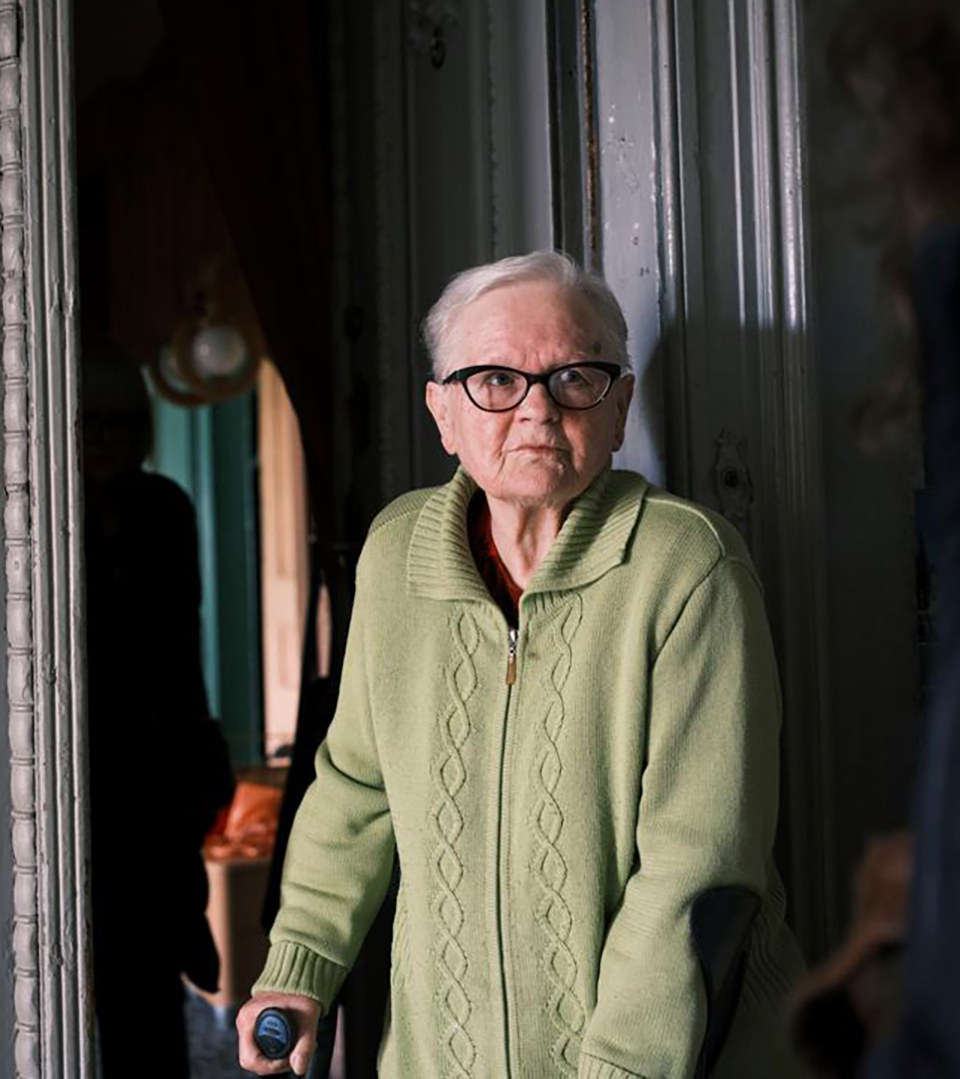
Portrait of longtime resident Halina Parzonko outside her fourth-floor apartment at Wilenska 9 Street in Warsaw, whose mother remembered pre-war Jewish neighbors and WWII mezuzah removal

The Mezuzah from Wileńska Street – A Story Featured in The New York Times.
Eyewitness Testimony on Why Mezuzahs Were Removed

The story of this mezuzah from Wileńska Street in Warsaw has attracted international attention and was featured in The New York Times.

But behind this small historical object lies a much larger story – one of Jewish life in pre-war Warsaw, the German occupation and the disappearance of mezuzahs from the doorways of Jewish homes during World War II.

While researching the history of this building, we had the opportunity to meet one of its former residents, Mrs. Halina Parzonko. We asked her a question that had remained unanswered for decades:

What happened to the mezuzahs that once marked the doorways of Jewish homes? Why did they disappear?

Mrs. Parzonko shared a remarkable memory passed down through her family. Her mother had personally witnessed German soldiers removing mezuzahs from the doorframes of the building during World War II.

As Mrs. Parzonko recalled:

“My mother watched as German soldiers during World War II used knives to pry mezuzahs off door frames in the building, telling her to mind her own business or she would end up like her neighbors who had been taken away.”

This testimony reveals a disturbing detail of the German occupation of Warsaw. The mezuzahs were not simply lost over time or removed during renovations. Their disappearance was connected to the persecution and destruction of the Jewish community.

A mezuzah, traditionally placed on the doorpost of a Jewish home, is a visible expression of Jewish identity and faith. Removing it was also an act of erasing the signs of Jewish presence from everyday life.

Field research by MI POLIN inside Wilenska 9 tenement in Warsaw documenting pre-war Jewish doorway traces

Jewish owners

In December 1896, the property passed into the hands of Hersh Halbszejn and Aron Kalisz, who in 1898-99 erected a three-story tenement with three outbuildings, compactly enclosing the courtyard.

Preparing to cast a direct mold from a pre-war mezuzah trace on a doorpost at Wilenska 9 Street in Warsaw
Taking a direct silicone impression of the surviving mezuzah trace at Wilenska 9 in Warsaw's Praga district
Detailed view of the doorway preservation work at Wilenska 9 Street honoring Polish Jewish history in Praga
Completed heritage documentation of the pre-war mezuzah trace at Wilenska 9 Street in Warsaw by MI POLIN
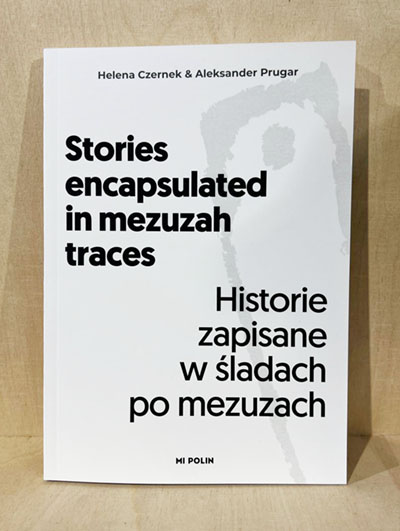
Designed by Helena Czernek and Aleksander Prugar, founders of MI POLIN and the world’s first mezuzah trace museum (MI POLIN Mezuzah Center in Warsaw)Who is mI POLIN?

You may also like…

Go back