MEZUZAH
WILNO (VILNUS 1)

$258.00

The idea:

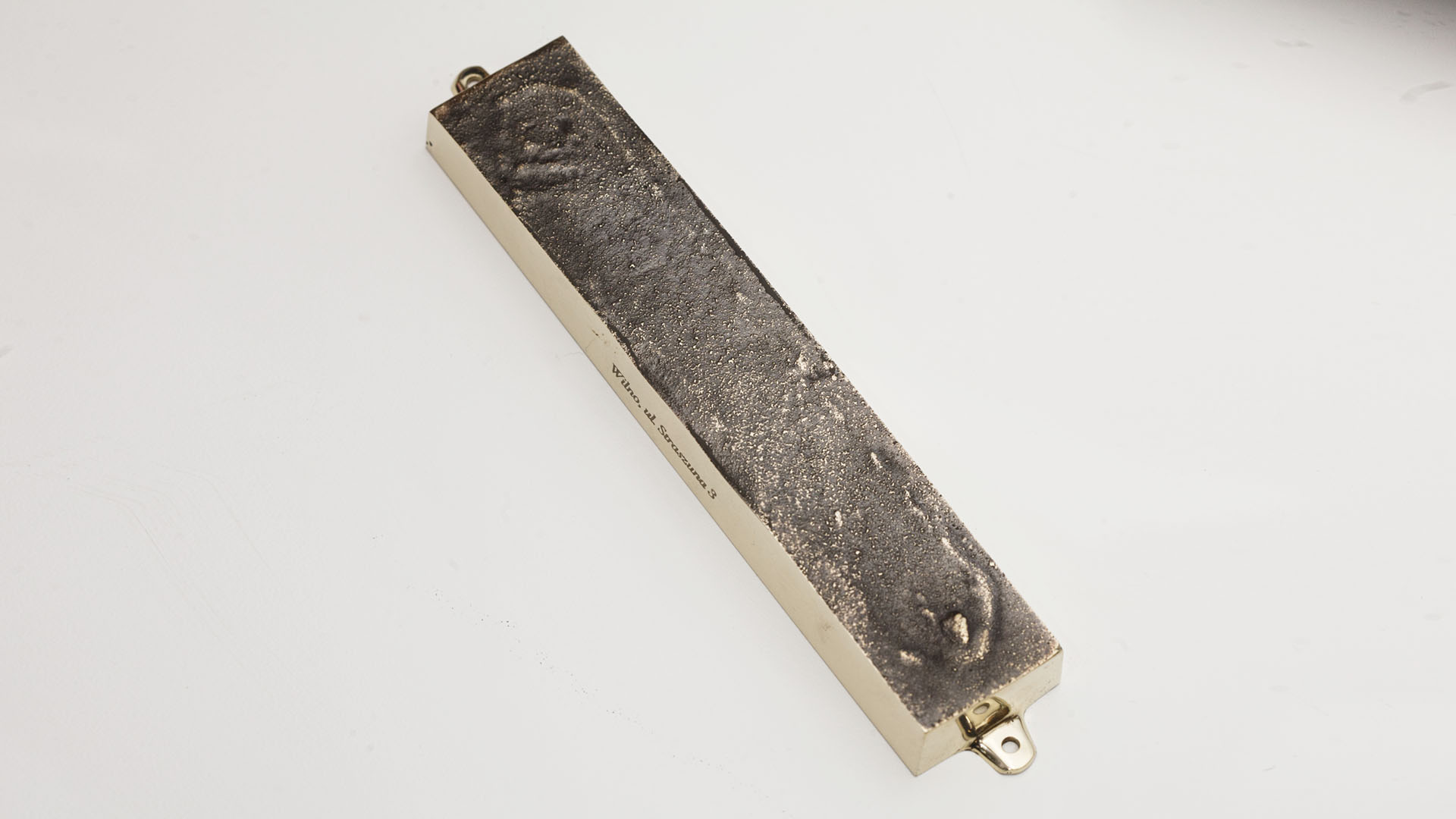
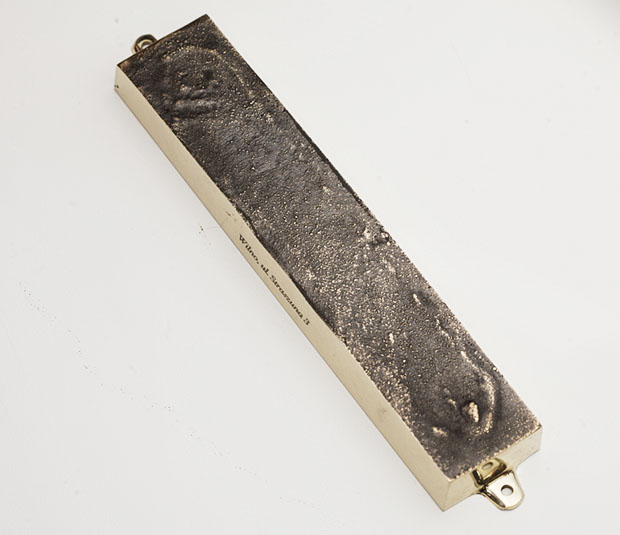
Bronze Mezuzah from Wilno (Vlinus in Lithuania). This mezuzah is a bronze cast of imprint of the mezuzah trace found at the old tenement in Wilno (Vilnus in Lithuania). We created a new mezuzah out of bronze to make the history tangible. Touching the mezuzah activates a link between past and present. MI POLIN – contemporary judaica brand from Poland.

Size

3,93” long / 0,98” wide

Material

Bronze

SET & PRICE

The given price is the final product price for a set consisting: product and a dedicated to this product e-booklet.

TAX

In exceptional circumstances, a customs duty of $10 – $20 may apply. The change is due to US administration policy. Applies to shipments to the USA.

SHIPPING

Fare starts form 48$ to USA and to most countries outside EU. We ship by UPS. 

Production

All components, prints, raw materials and finished products were manufactured 100% in Poland.

Shipping info Worldwide UPS shipping rates starts:
Poland – always 5,5$
USA & CANADA - from $40
UE & UK - 22$
THE WORLD – 55$

Description

Discover the story of a unique bronze mezuzah from Vilnius, Lithuania. Cast from an authentic historical mezuzah trace, this object preserves the memory of Jewish life in pre-war Vilnius and the extraordinary history of one of the city’s surviving historic tenement buildings. “Mezuzah from This Home” heritage judaica collection

The trace of mezuzah FROM VILNIUS

Close-up of a slanted paint outline and nail indentations left by a pre-war mezuzah case on a dark brown wooden doorframe by the entrance stairs at Zemaitijos 3 (Strashun 3) in Vilnius, Lithuania
Mezuzah trace status: limited access to public

bronze cast of the mezuzah trace FOUND IN Vilnius

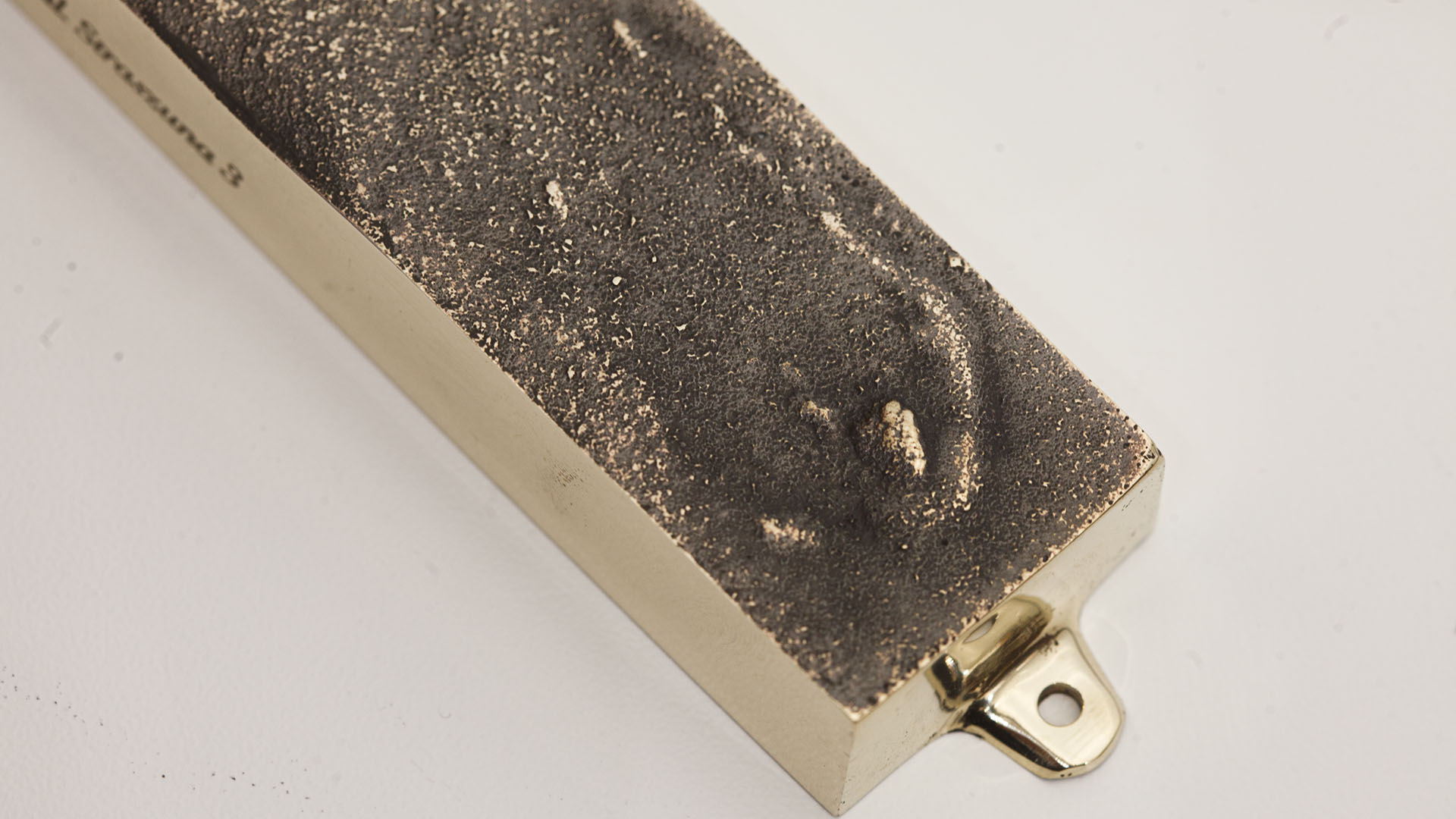
• Product macro photograph of the solid bronze mezuzah by MI POLIN from Vilnius (Wilno) 2, highlighting the bottom mounting loop, polished brass-toned bronze side, and textured front
JUDAICA MEZUZAH BASED ON MEZUZAH TRACE FROM LITHUANIA
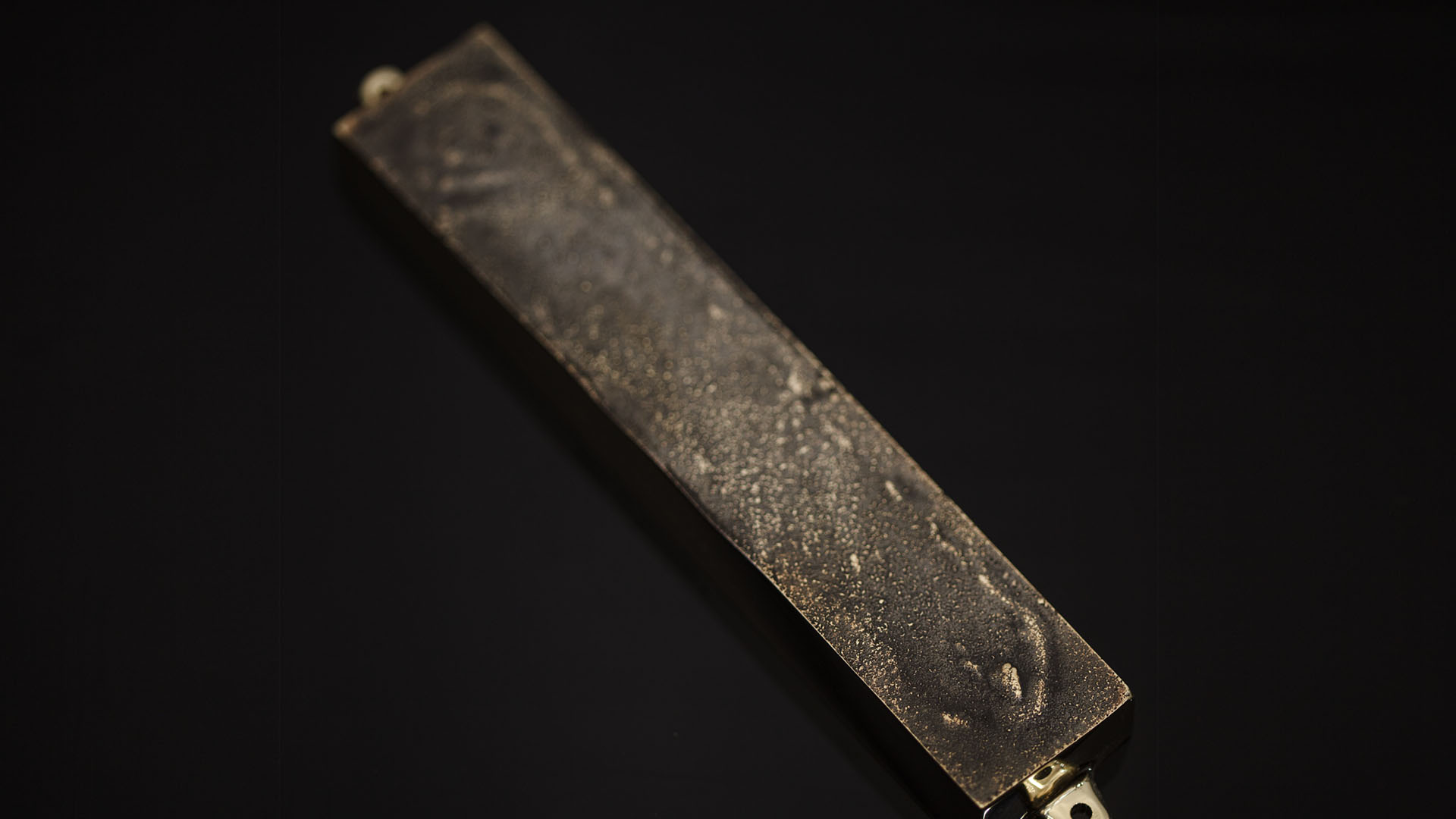
Contemporary bronze mezuzah product by MI POLIN created from a pre-war mezuzah trace in Vilnius (Wilno), photographed diagonally on a dark background with shallow depth of field

The story hidden behind mezuzah trace
from wilno

The jerusalem of the north europe. HISTORY OF JEWISH VILNIUS

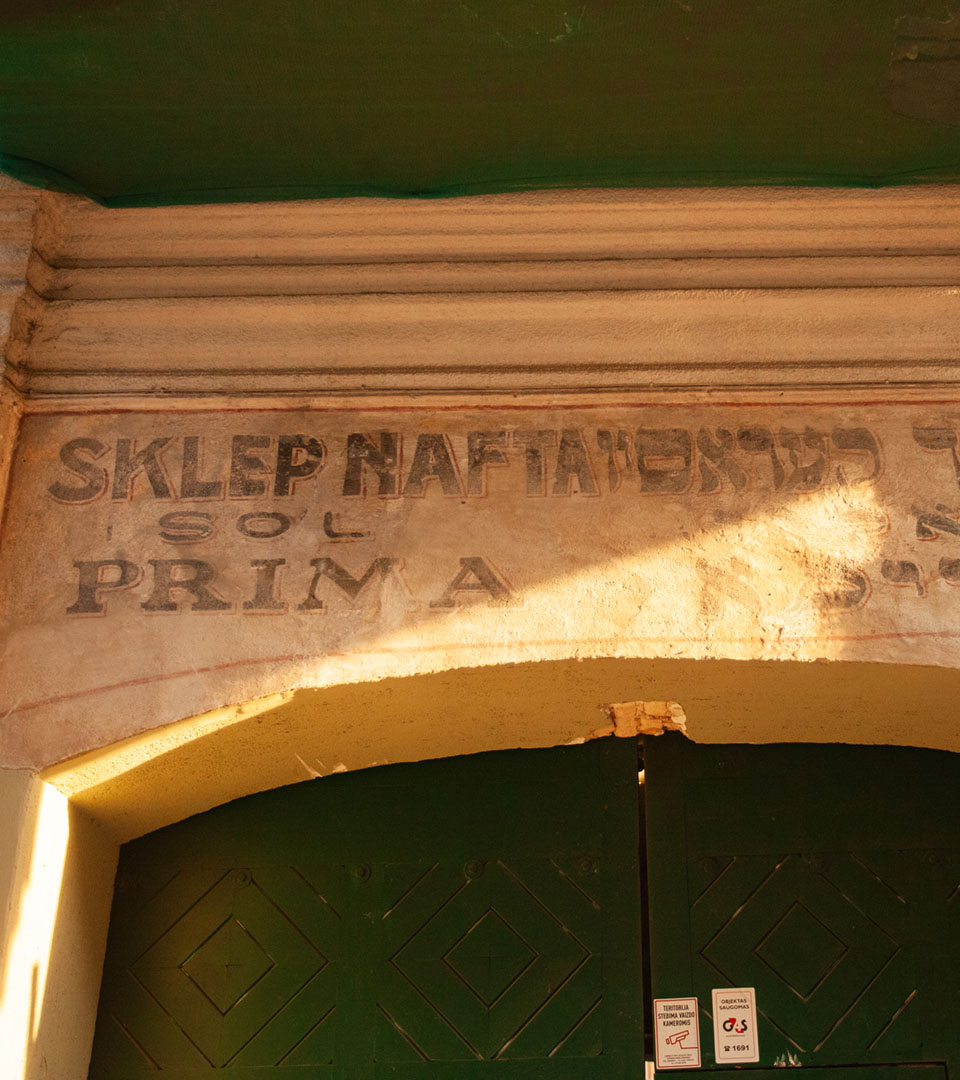
Before World War II, Vilnius (known in Polish as Wilno and in Yiddish as Vilna) was revered across the Jewish world as the “Jerusalem of the North” (Yerushalayim de-Lita). By the early 20th century and on the eve of 1939, around 60,000 Jews lived in Vilnius—making up nearly one-third of the entire city’s population—and sustained an extraordinary network of 135 synagogues and prayer houses, Talmudic academies (yeshivot), Yiddish theaters, publishing houses, and the world-renowned YIVO Institute for Jewish Research. At the spiritual center of this community stood the Great Synagogue of Vilna (built in 1633 on Jewish Street / Žydų Street, just steps from here), where the legendary Vilna Gaon (Rabbi Elijah ben Solomon Zalman) taught, alongside the famed Strashun Library (founded in 1892 from the 7,000-volume collection of scholar Mattityahu Strashun and housing over 35,000–45,000 rare Judaica books before the war). What stood on this very street (Žemaitijos / Strashun Street)? Between 1921 and 1951, today’s Žemaitijos Street was officially named Mattityahu Strashun Street (ul. Straszuna). Before 1939, it was a bustling commercial artery of the Jewish quarter: authentic interwar Yiddish and Polish shop signs preserved on its courtyard arches still recall Chaja Link’s salt and kerosene shop (“Sklep Nafta Sól Prima”) and Jankel and Gidla Gordon’s colonial goods store. During the Holocaust, this entire street was sealed inside the Big Vilna Ghetto, where 70,000 Jews were crowded under Nazi terror before the ghetto’s liquidation in September 1943 and the mass murder of tens of thousands at Ponary (Paneriai). Right down the block at Strashun Street 6 (now Žemaitijos 4) operated the famous Vilna Ghetto Library (serving 700 readers daily while hiding an underground resistance weapons-testing bunker in its basement), and at Strashun Street 2, on New Year’s Eve 1941, 150 young pioneers issued the first historic call for armed Jewish resistance in occupied Europe (“Let us not go like sheep to the slaughter”). At Žemaitijos Street 3 (formerly Strashun 3), MI POLIN uncovered two distinct pre-war mezuzah traces on a single doorway—proof that two consecutive Jewish households once lived behind these doors—discovered by Barbara Mirosław-Szewel after our 12-year search in Lithuania.

Mezuzah trace found by: 

Barbara Mirosław – Szewel

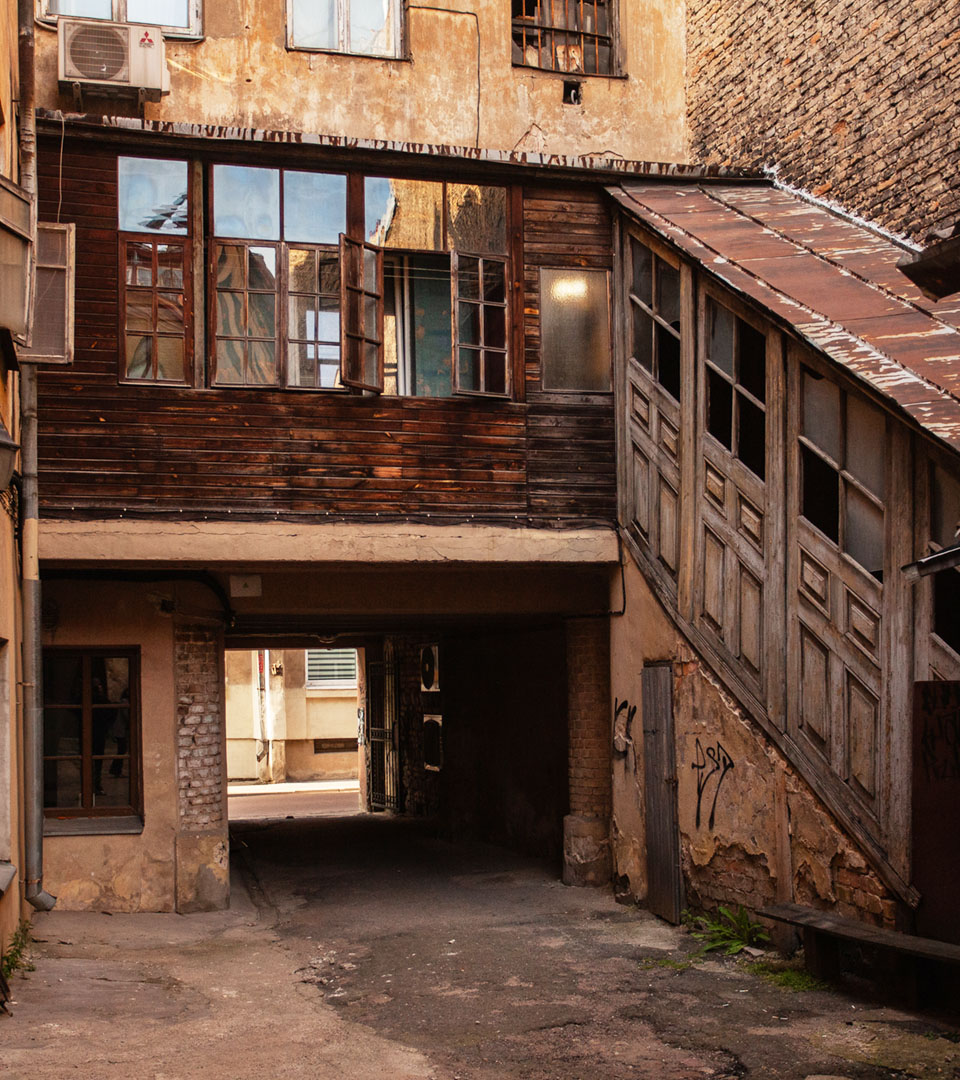
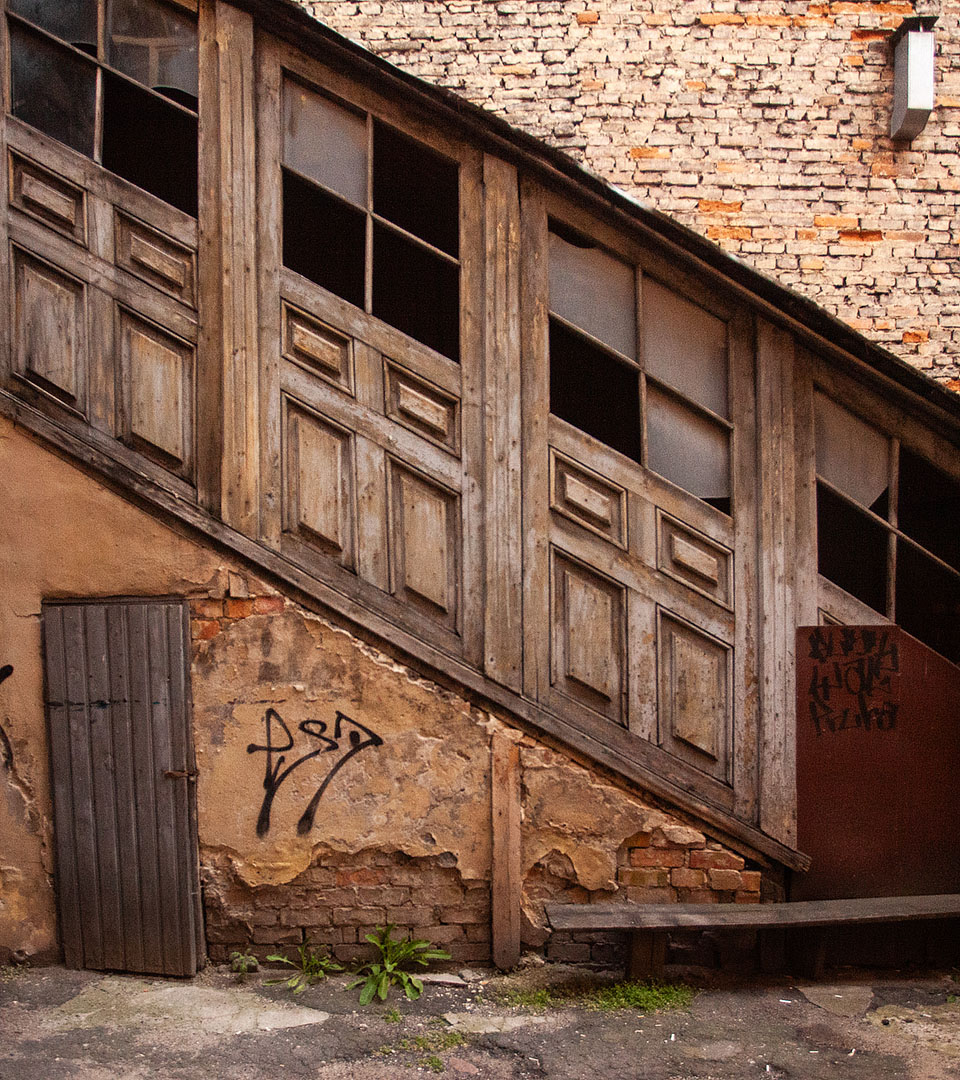
Inner courtyard of the historic pre-war tenement at Straszuna 3 (Zemaitijos 3) in the former Jewish quarter of Vilnius (Wilno), featuring an enclosed wooden staircase, timber gallery, and archway
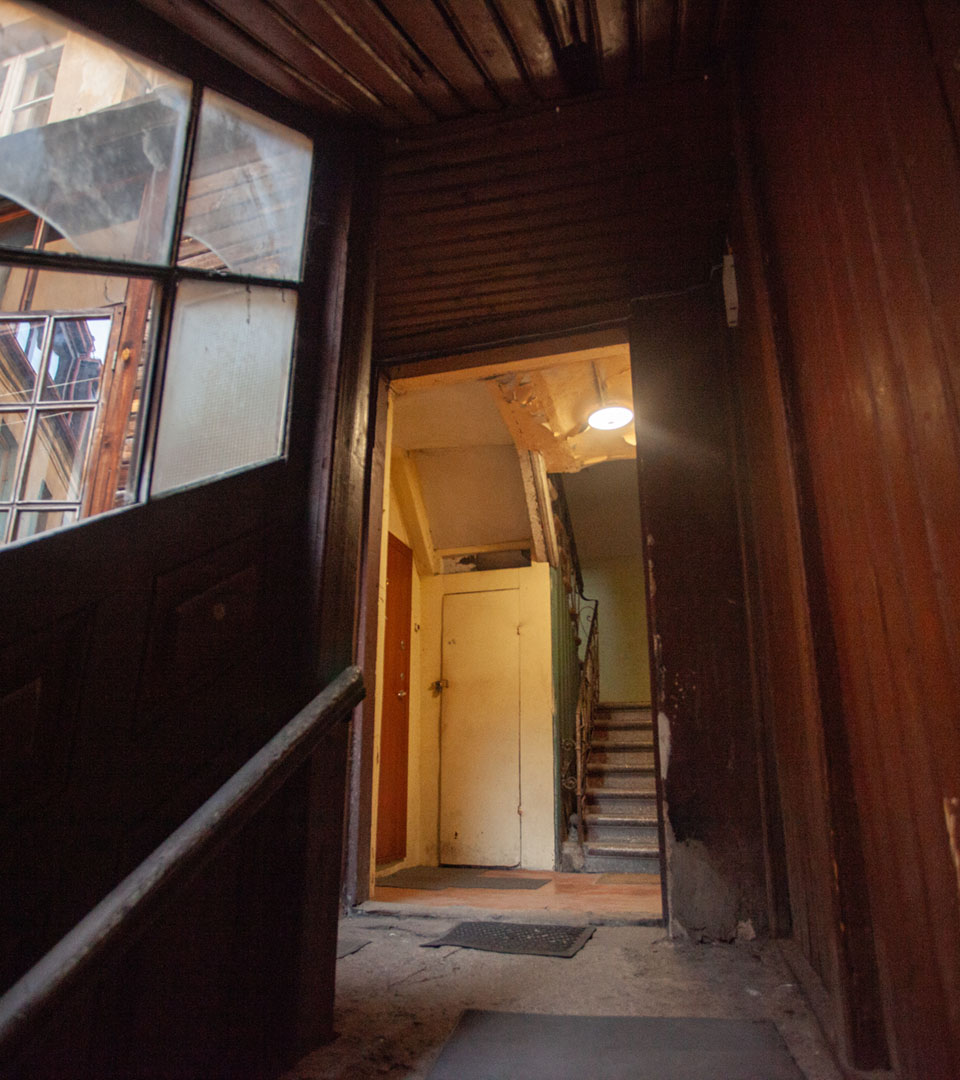
Interior view inside the enclosed wooden stairwell and corridor of the pre-war tenement at Straszuna 3 (Zemaitijos 3) in the former Jewish quarter of Vilnius (Wilno), Lithuania
• Sunlit cobblestone Zemaitijos Street (formerly Mattityahu Strashun Street) in Vilnius Old Town, historic Jewish quarter and former Big Vilna Ghetto, with hot air balloons in the sky
Uncovered pre-war bilingual shop sign painted in Polish ("SKLEP NAFTA SÓL PRIMA") and Yiddish/Hebrew script above a green arched gate on Zemaitijos Street (formerly Strashun Street) in Vilnius, Lithuania
Close-up of the weathered wooden staircase gallery, peeling plaster, and aged brickwork at Straszuna 3 (Zemaitijos 3) in Vilnius, illustrating how pre-war mezuzah traces mostly survive in old, unrenovated tenements
Portrait of MI POLIN founders Aleksander Prugar and Helena Czernek, Polish artists and mezuzah trace hunters who founded the world's first mezuzah trace museum in Warsaw

MI POLIN

Pssss! We spot a mezuzah trace at this tenement! The Haaretz called us the mezuzah traces hunters. So far, we have found more than 160 mezuzah traces. We cast them in bronze to create new mezuzahs. MI POLIN – contemporary judaica. We make history tangible. Created by Aleksander Prugar and Helena Czernek in Warsaw, Poland.

Designed by Helena Czernek and Aleksander Prugar, founders of MI POLIN and the world’s first mezuzah trace museum (MI POLIN Mezuzah Center in Warsaw)Who is mI POLIN?

You may also like…

Go back